
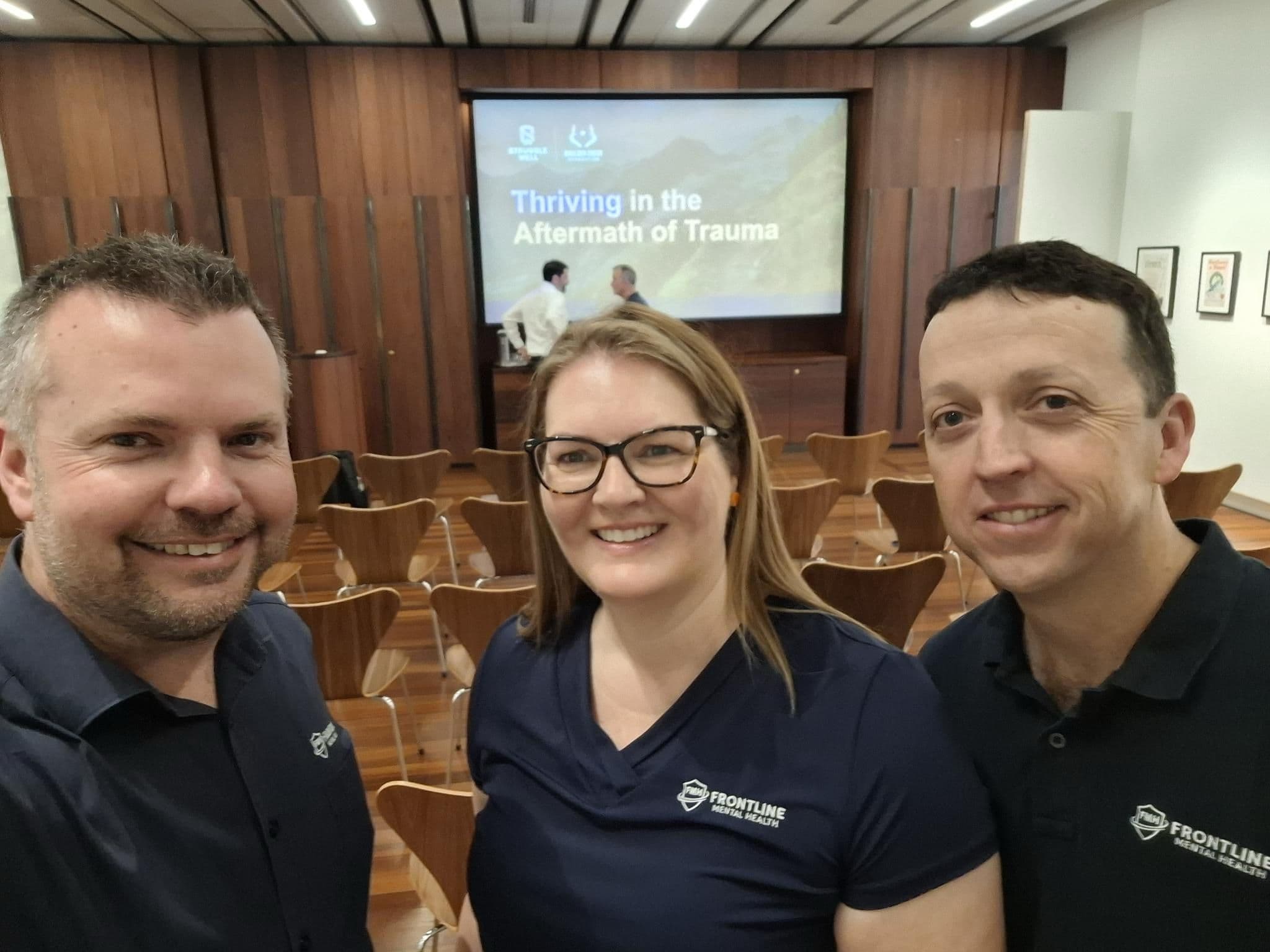
Built for the community it serves
There's a difference between a mental health practice that treats veterans and first responders, and a practice that was built by them.
Frontline Mental Health is the second one. Based in Adelaide, working nationally via telehealth and in-person they are the Platinum Preferred Provider on M1R Alliance — not because they paid the most, but because they did the work to earn the badge.
The problem they're solving
Veterans and first responders carry presentations that mainstream private psychology doesn't always know how to hold. Moral injury. Operational guilt. The specific way that shift work and trauma compound. The reluctance to "go to therapy" that comes from a culture where stoicism was a survival skill, and the equally specific reluctance to stay in therapy once it starts working.
Most clinical training programs don't teach this stuff. You learn it by living it, or by sitting opposite enough people who have lived it. Frontline does both.
What they actually offer
The practice covers the standard suite of evidence-based modalities — CBT, ACT, schema work, trauma-focused interventions — delivered by clinicians who've either served themselves or built a deep career-long focus on this community. They also offer a number of programs and workshops for veterans and first responders as well as mining, government and corporate sectors. What's different is what surrounds the clinical work:
- **DVA-aware billing.** They know NLHC for mental health, they know the paperwork, they know what to do when DVA pushes back on something. You're not the case study they're learning on.
- **Shift-work flexibility.** Bookings that work around 12-hour shifts and unpredictable callouts.
- **National telehealth.** You don't need to live in Adelaide to be a client.
- **Couples and family work.** A lot of the damage from a service career lands on the household. Frontline holds that.
Why it earned Platinum
The M1R Alliance Platinum Preferred Provider tier isn't bought — it's curated. Platinums get the badge because they back the mission visibly, hand referrals back to the community, and run the kind of operation we'd send our own family to.
Frontline does all three. They co-host events, they refer M1R Alliance members to other listings, and they treat the community as colleagues — not customers.
How to make contact
If you're a current or former ADF member, or a current or former first responder, and you're carrying something you'd rather not be carrying — head straight to the listing.
Frontline Mental Health on M1R Alliance
Telehealth is available nationally. In-person is Adelaide.
What the rest of the directory looks like
Frontline isn't alone in this space. The full Health & Medical and Mental Health category pages on M1R Alliance list every verified practitioner in the network. The companion guide to the broader landscape — Open Arms, DVA NLHC, Medicare, and private practice — is in The Veteran's Guide to Private Mental Health Support in Australia.
Frequently asked questions
Do I need a DVA White Card to see Frontline?
No. They see clients on DVA NLHC, on Medicare Mental Health Care Plans, and as self-funded private patients. The intake conversation will clarify what funding path suits your situation.
Is the practice only for veterans?
No. Frontline is built for both veterans and first responders — police, fire, paramedic, corrections, ambulance and SES. They also see partners and family members.
Can I see them via telehealth from anywhere in Australia?
Yes. They run telehealth across all states and territories. In-person sessions are in Adelaide.
How do I get in touch?
The contact details, phone number and intake form are all on the Frontline Mental Health listing on the M1R Alliance directory.